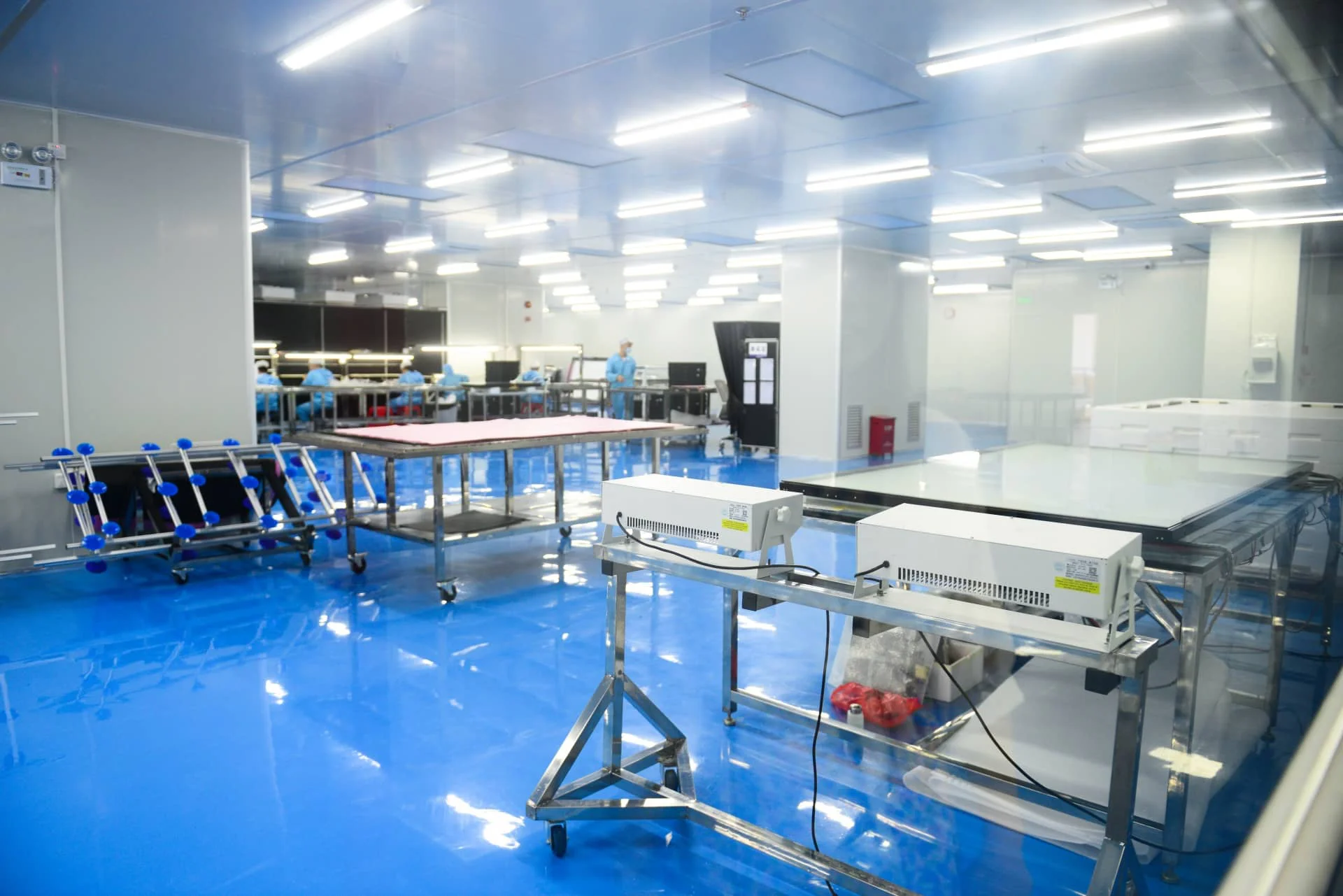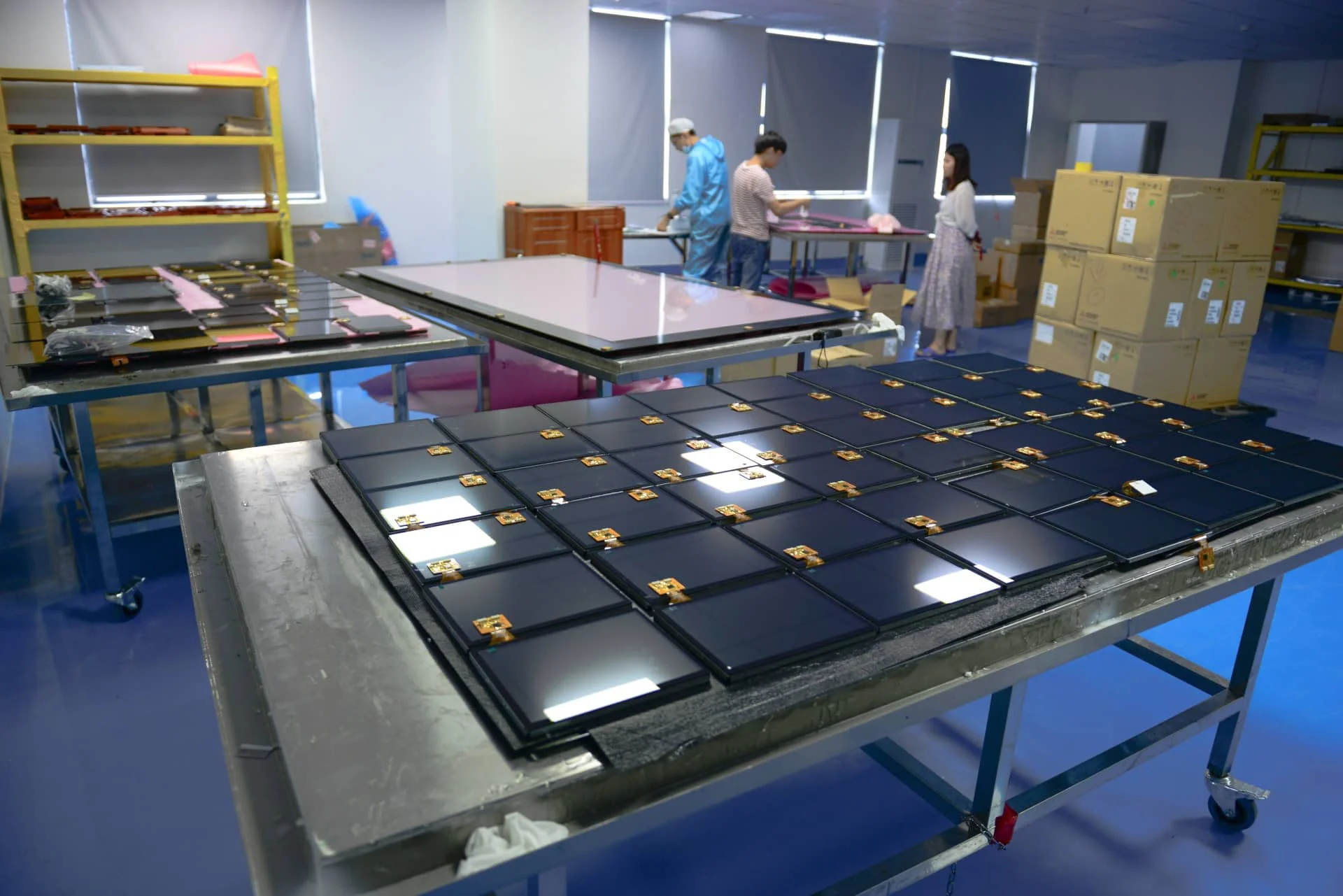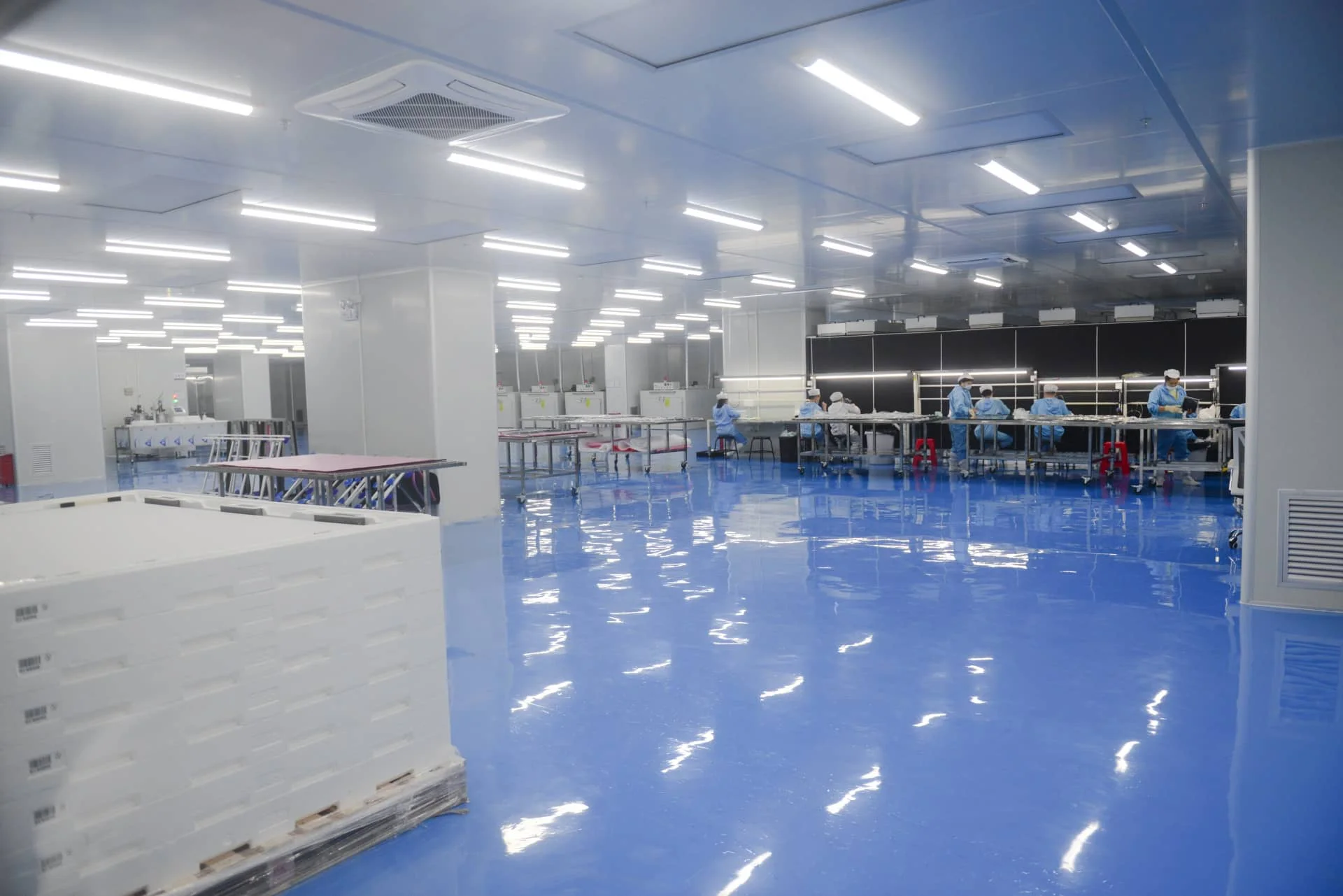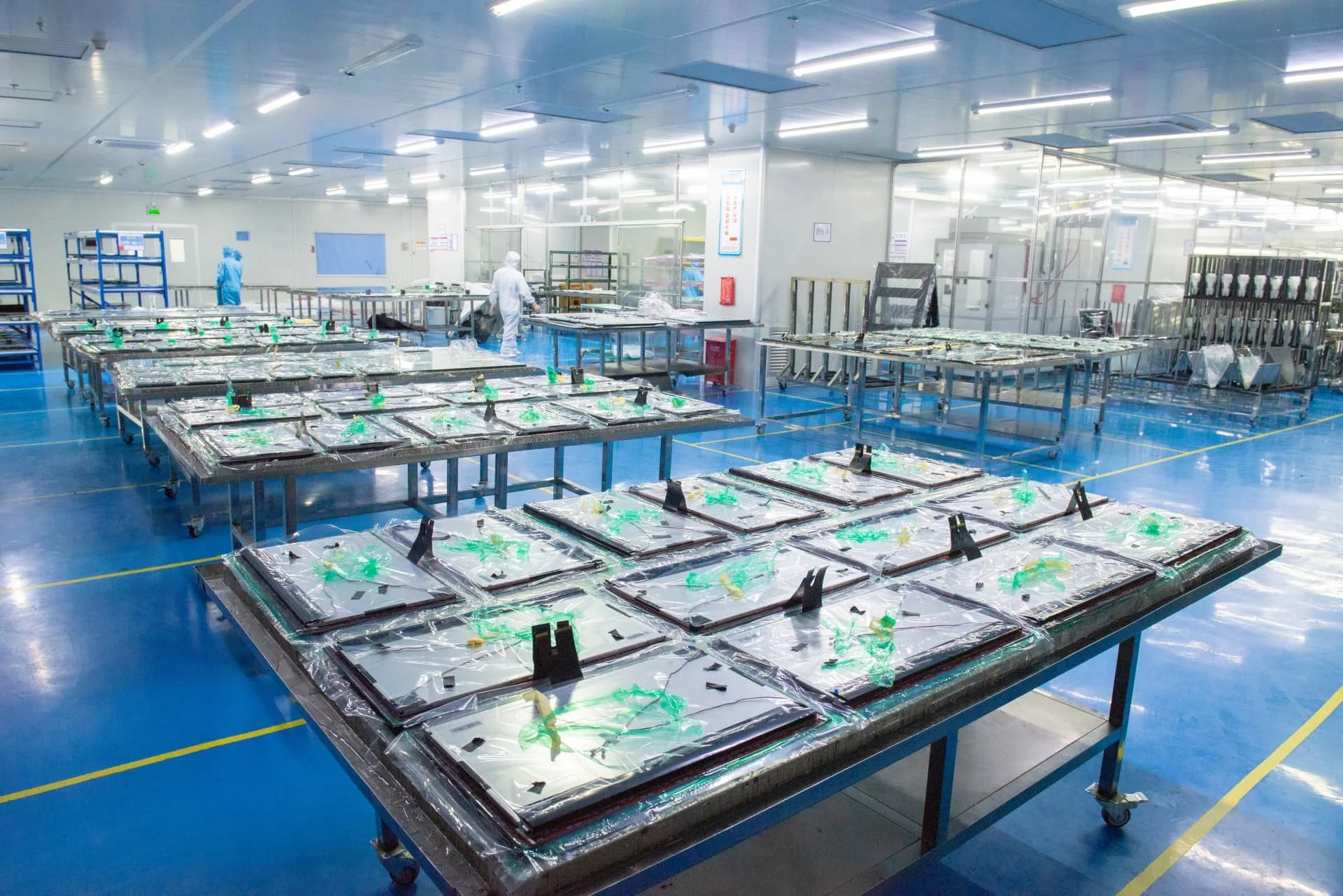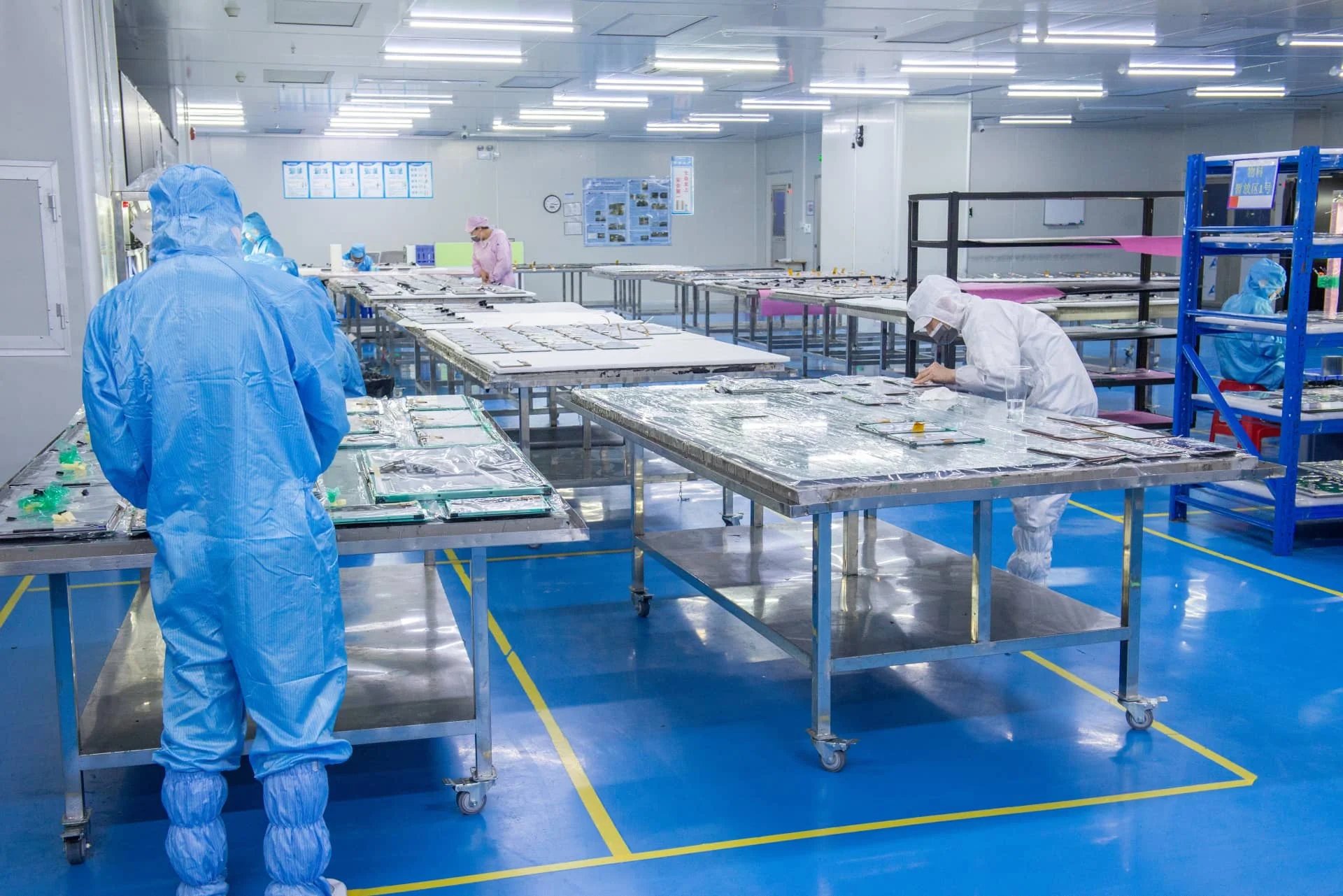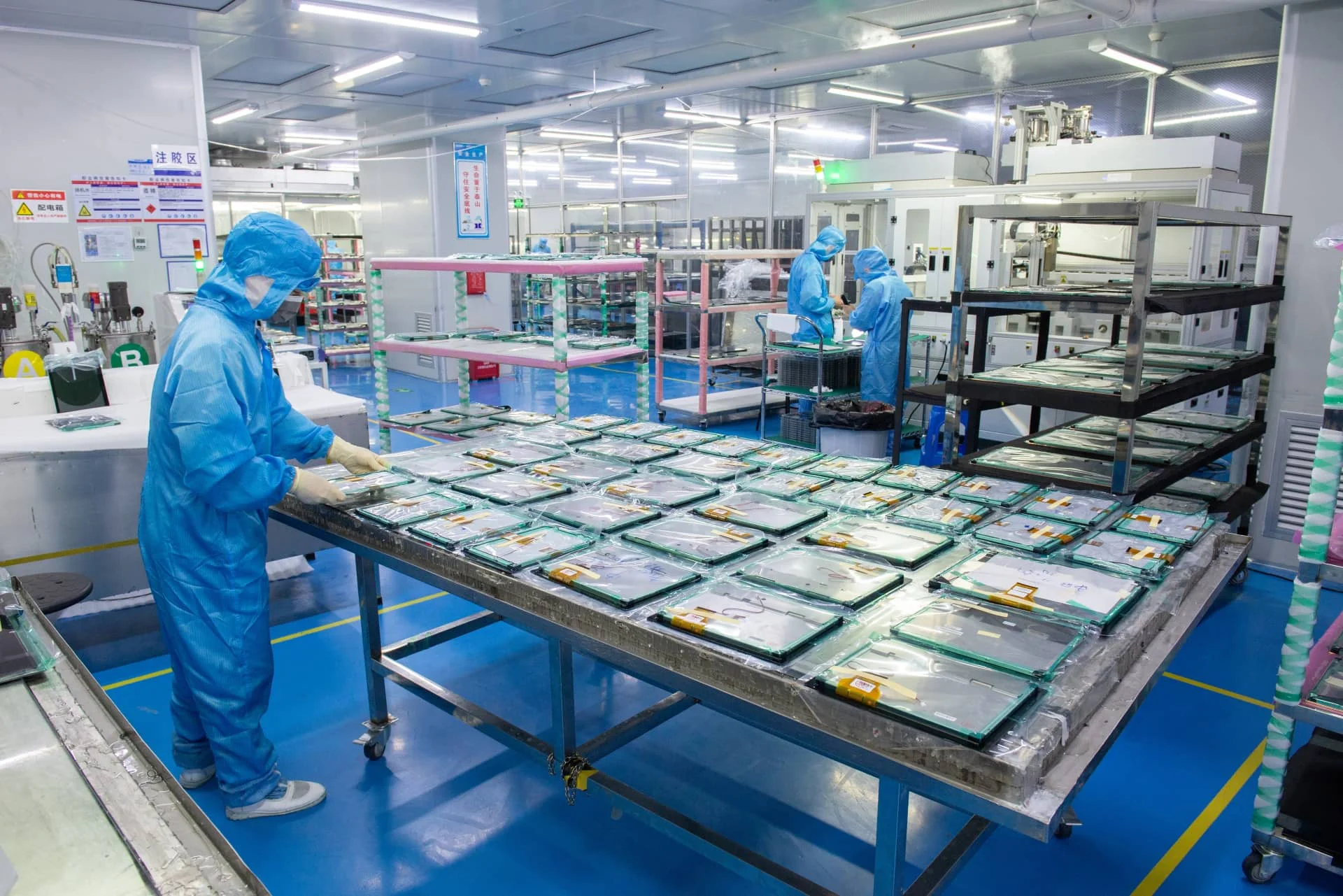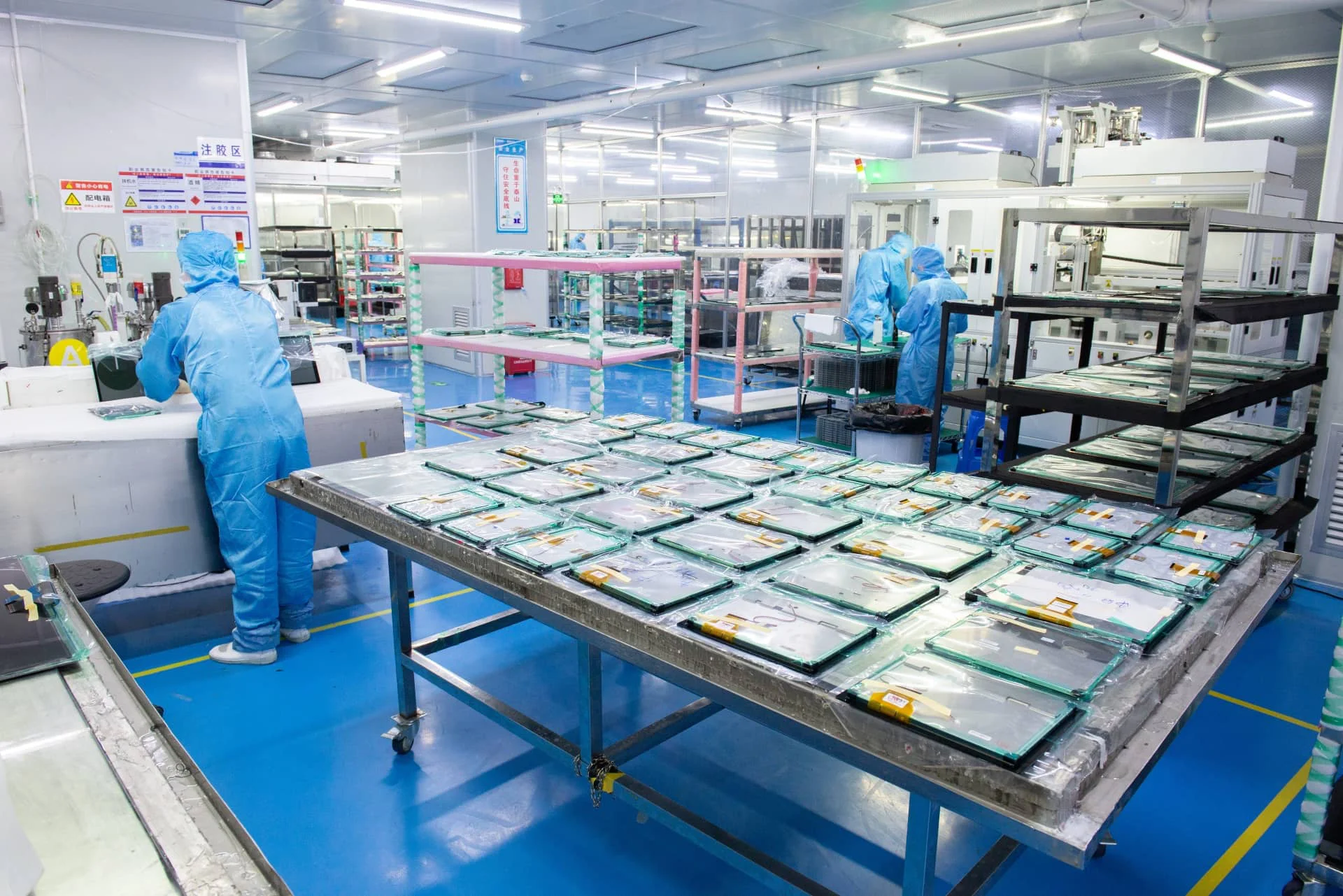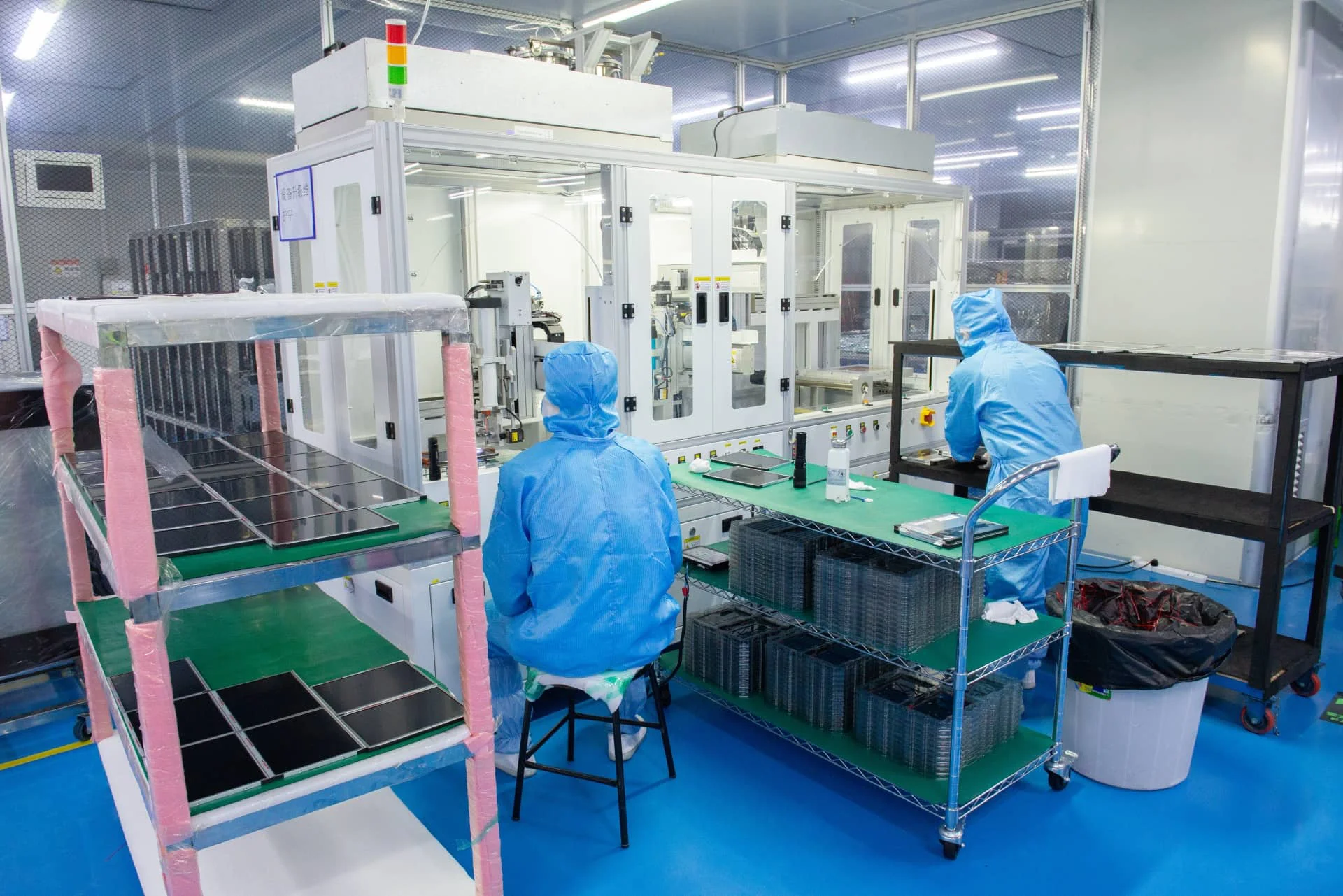
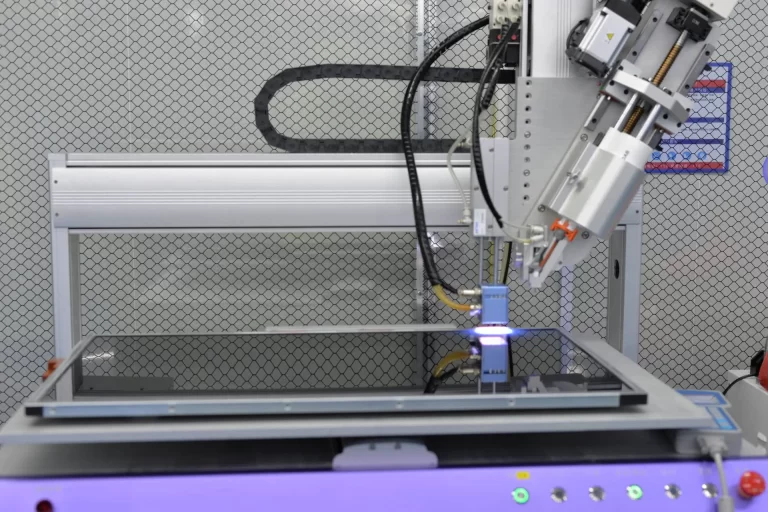
2.LCM Sealing Dam
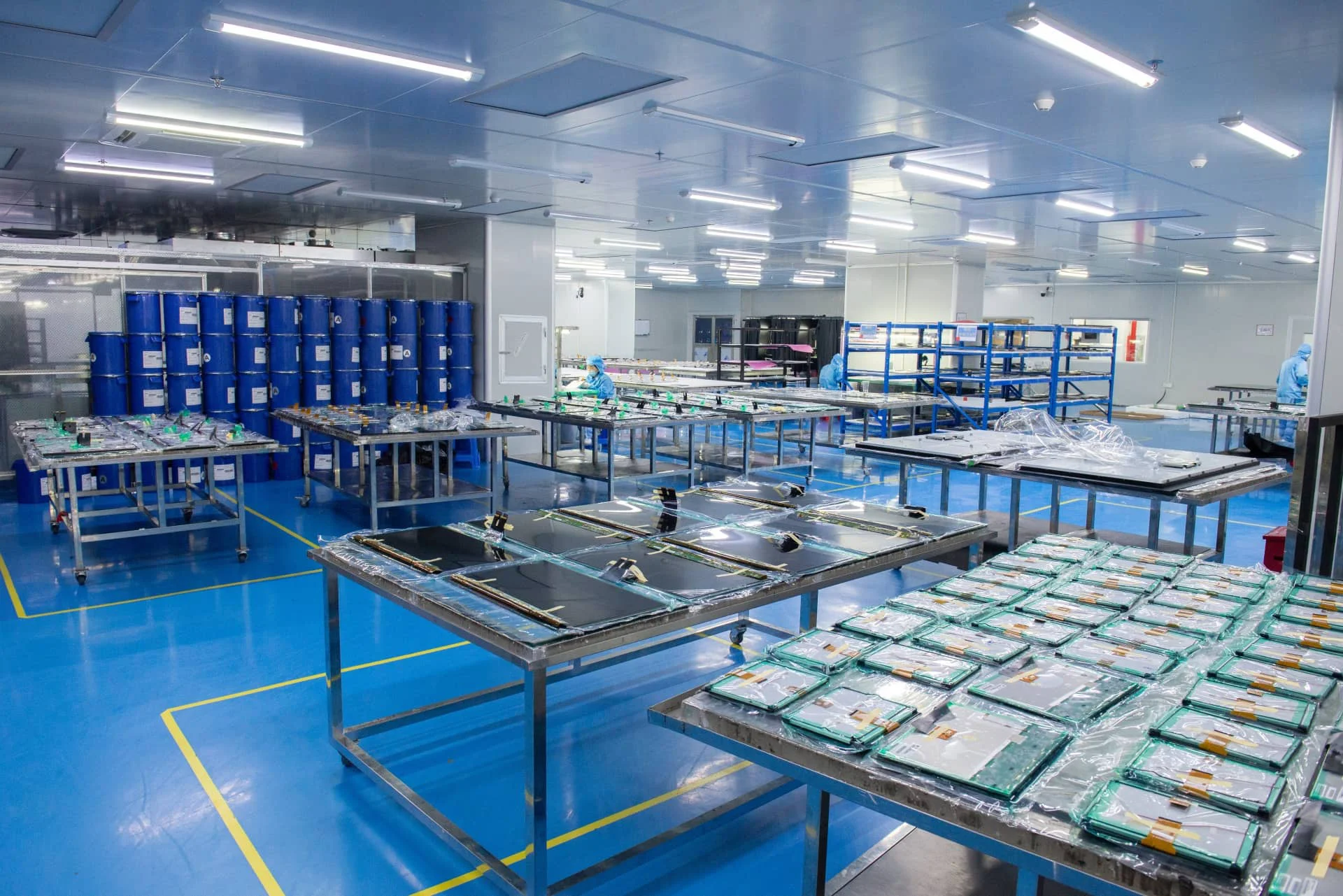
Apply UV glue into the gaps of the LCD metal frame, and cure it with a UV lamp to prevent the potting compound from entering the LCD backlight during subsequent potting.
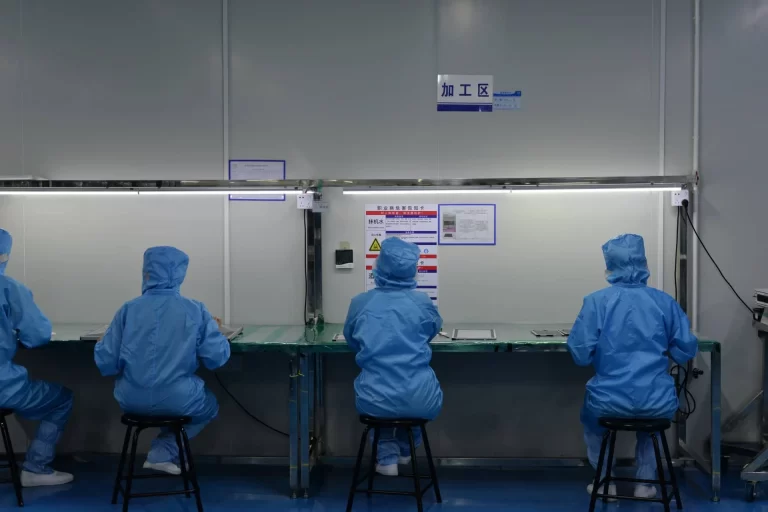
3.Remove Excess Adhesive
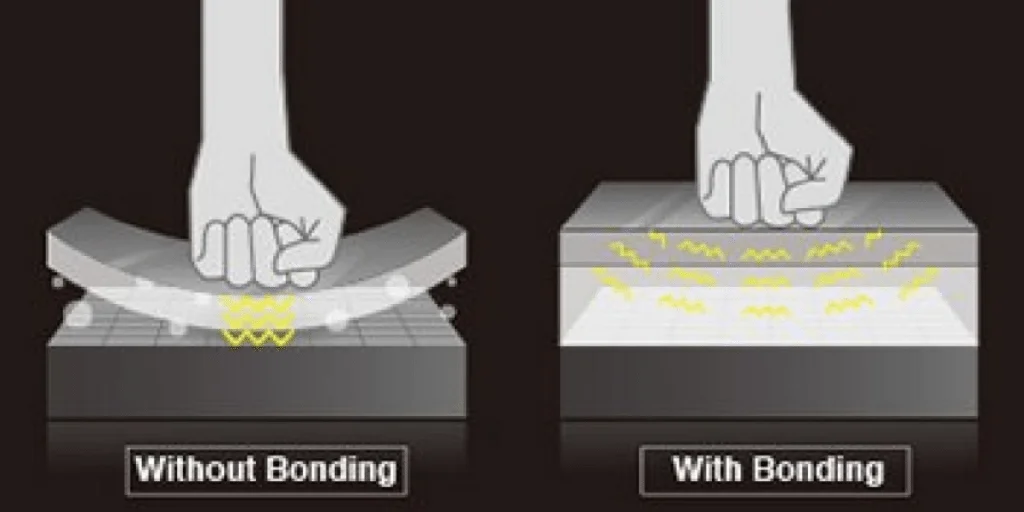
Apply a ring of 3M tape or a ring of black adhesive on the LCD iron frame to bond the LCD and touch screen together, forming a box and leaving a glue filling port.
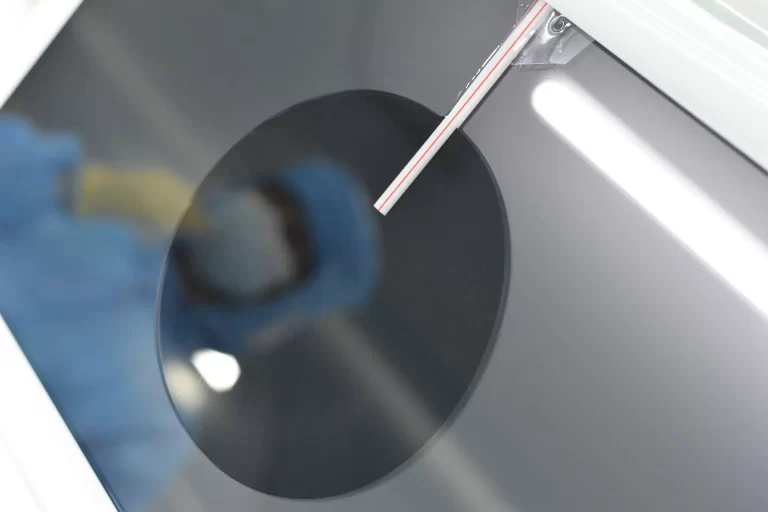
4.Inject Wacker Sealant
Ensure no air bubbles are formed during the process.
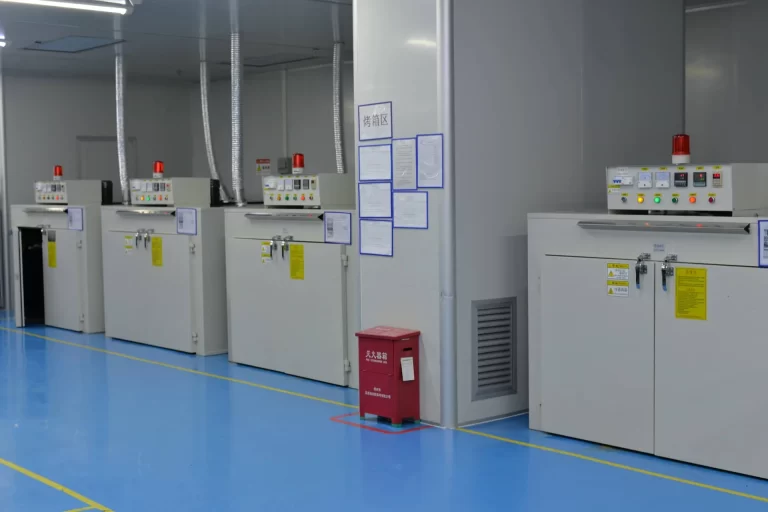
5.Accelerate Curing via Baking
Bake at 50°C for 1 hour to accelerate the adhesive curing.
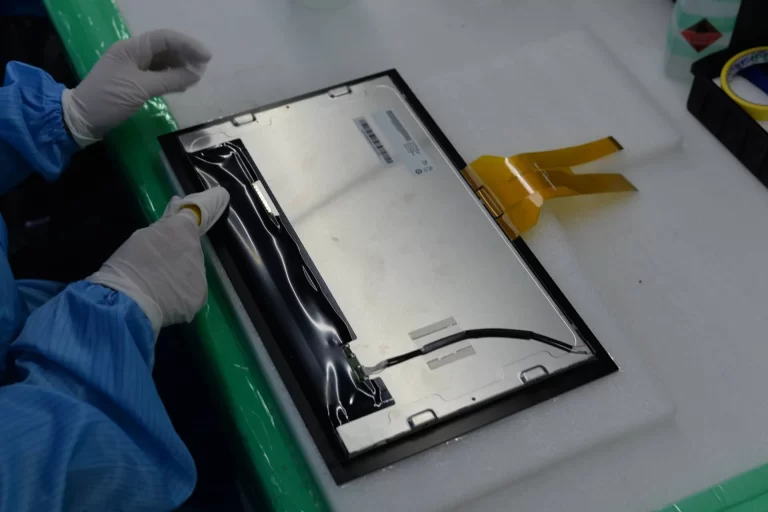
6.Clean Residual Adhesive
Use alcohol to remove any excess adhesive from the screen. Simultaneously, check for air bubbles or foreign particles.
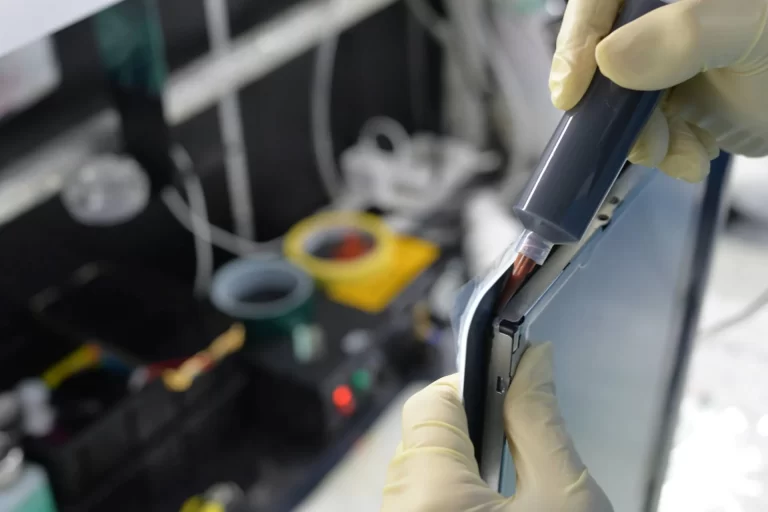
7.Seal Edges with Black Adhesive
Apply additional black adhesive along the frame to enhance waterproofing and reinforce the injected sealant layer.
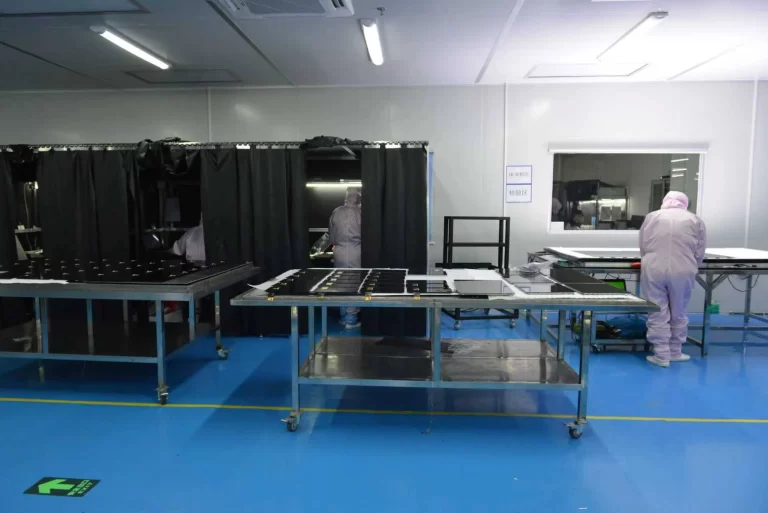
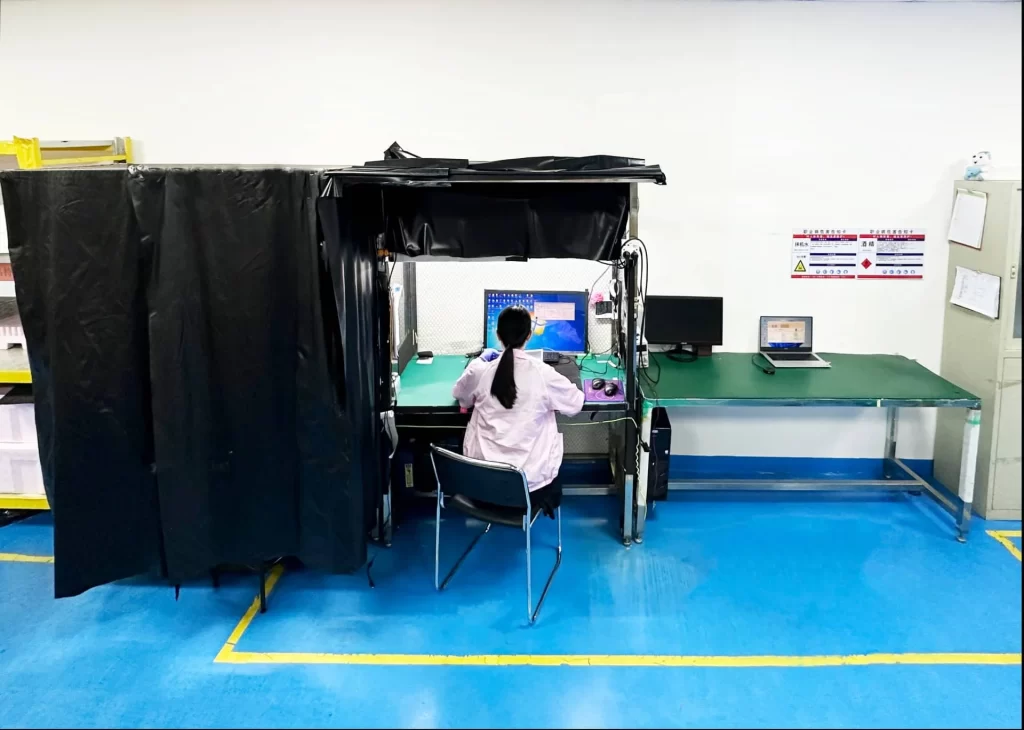
8.QC Testing
Check for foreign objects inside the screen and surface scratches. Inspect for dead pixels or dark spots under different background colors.
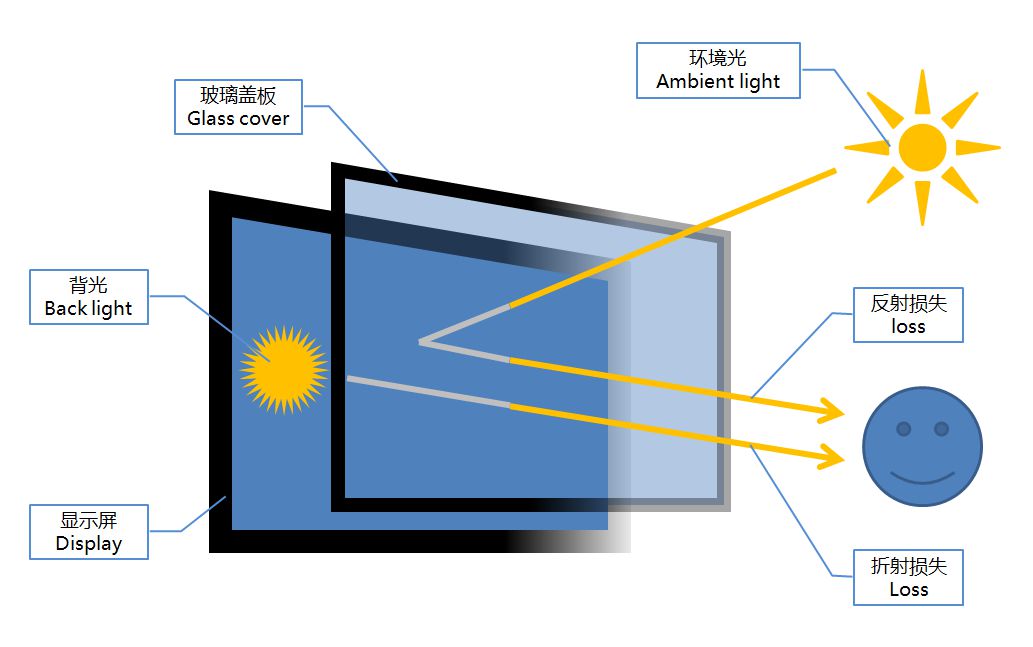
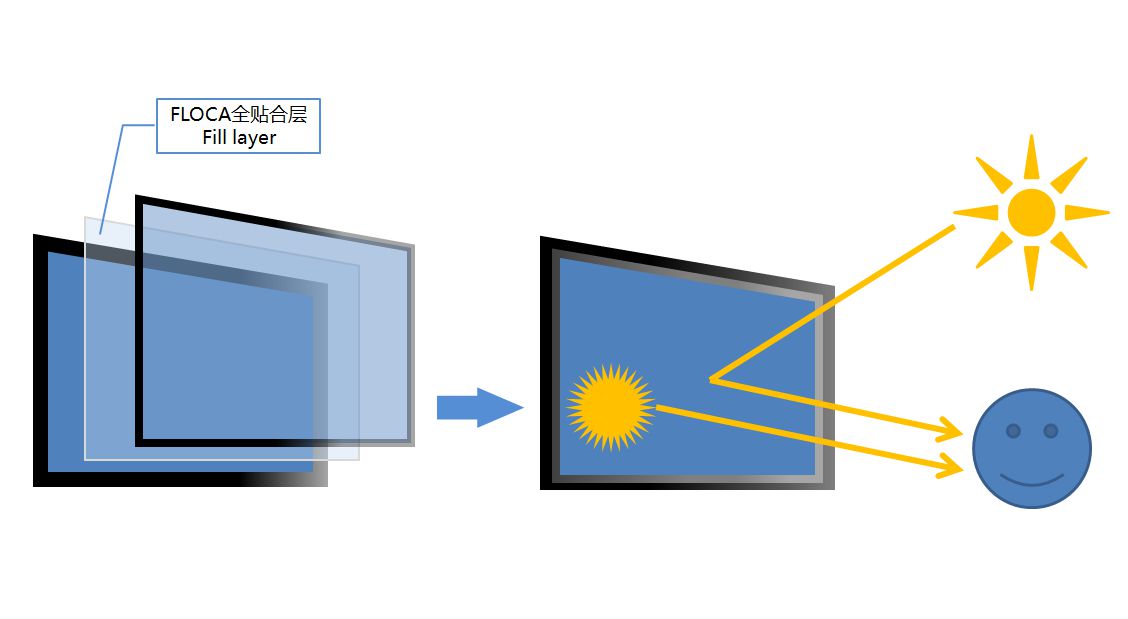

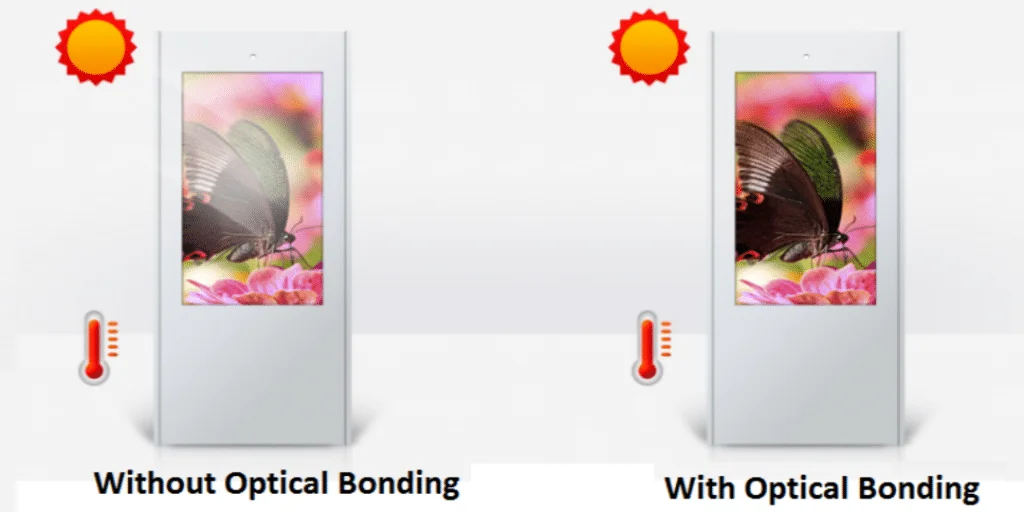
At least increas 10% Brightness of panel
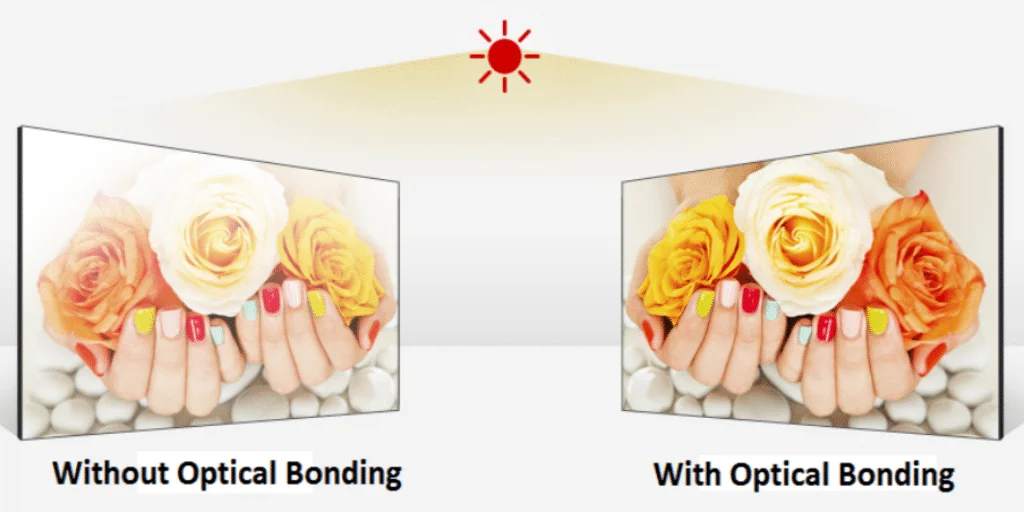
Sunlight readability (Text could be seen within 1m away from sreen)
The image & content will not be blur even the Viewing Angle keeps changed
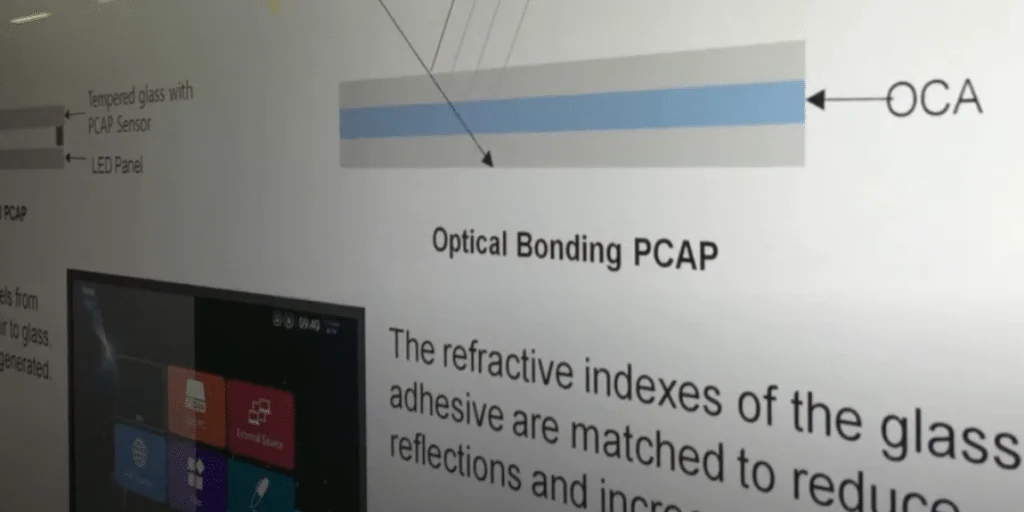
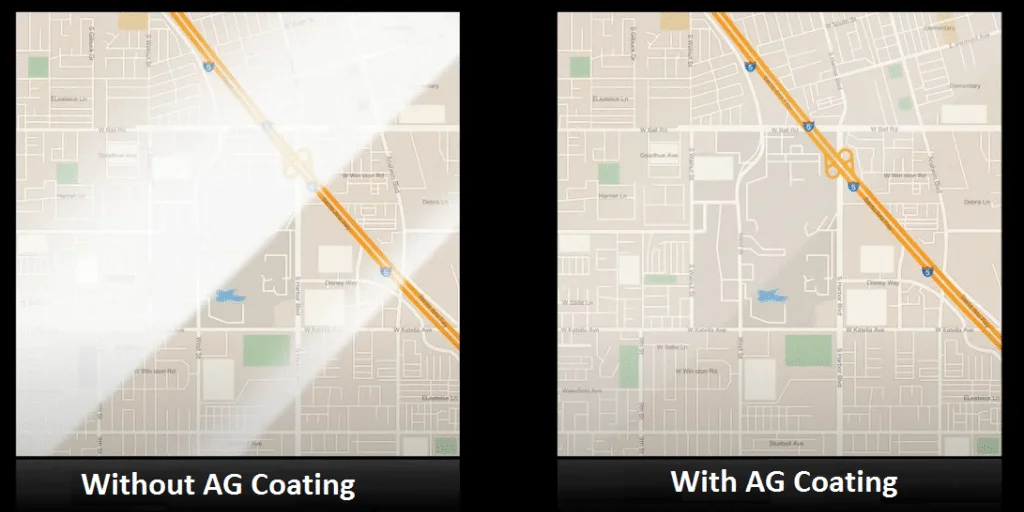
AG coating reduces reflections. More Clarity More Eye care
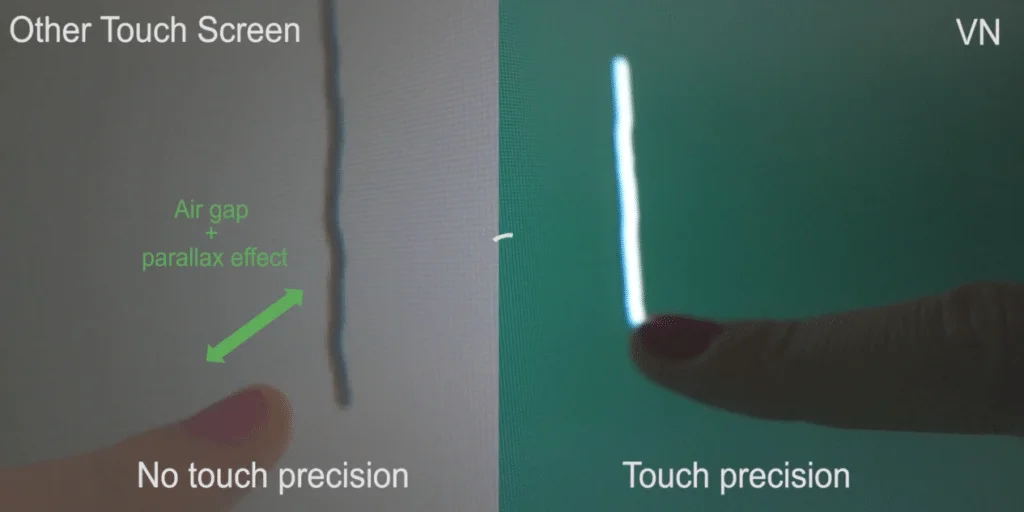
More accuracy and More faster for drawing and Writing No delay, No gap between finger and drawing

Be more able to withstand the external Impact and Scratched
-
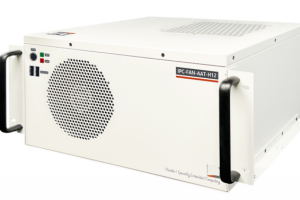 Industrial All-in-one Computer
Industrial Barebone System Mini Pc Linux Box PC barebone mini computer for AI Visual Positioning Equipment Automation
Embedded PC Box provide switches, indicator lights, and USB 2.0 ports . Lockable, and provides easy-to-identify color on and off-state markings to prevent omissions. Detachable dust-proof net
Product DetailsQuick View -
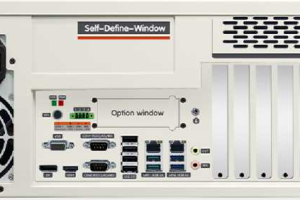 Industrial All-in-one Computer
Industrial All-in-one Embedded PC Box Full aluminum case fanless cooling PC 6 RS232 COM i3 i5 i7 industrial mini pc support 4K display
Embedded PC Box provide switches, indicator lights, and USB 2.0 ports . Lockable, and provides easy-to-identify color on and off-state markings to prevent omissions. Detachable dust-proof net
Product DetailsQuick View -
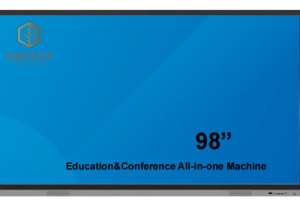 Conference & Education Integrated Machine, Industrial All-in-one Computer
98 Inch E-Learning Class Meeting Room IR Smart Multi-Media Interactive LCD LED Display with 4K Interactive Whiteboard
75-inch 4k All-in-one Conference displays with Aluminum alloy outer frame, sandblasted anodized surface, iron shell back covers, active heat dissipation; ultra-narrow sandblasted face frame, ultra-narrow design
Product DetailsQuick View -
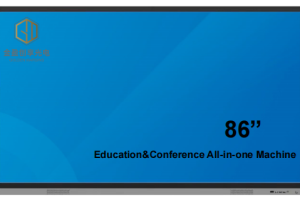 Conference & Education Integrated Machine, Industrial All-in-one Computer
Multi-Functions Conference All-in-one Touch Screen Smart TV IR Interactive Whiteboard Advertising Kiosk
86inch Multi-Functions Conference Touch Screen has a front-mounted expansion port: Front-mounted one-button start switch realizes three-in-one TV, computer, and energy-saving integrated switch function; convenient operation, simple and elegant appearance.
Product DetailsQuick View -
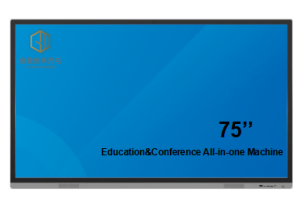 Conference & Education Integrated Machine, Industrial All-in-one Computer
75 inch 4k resolution wall mount smart board interactive whiteboard digital signage meeting room display
75-inch 4k All-in-one Conference displays with Aluminum alloy outer frame, sandblasted anodized surface, iron shell back covers, active heat dissipation; ultra-narrow sandblasted face frame, ultra-narrow design
Product DetailsQuick View -
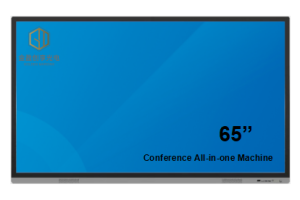 Conference & Education Integrated Machine, Industrial All-in-one Computer
All-in-one OPS interactive whiteboard infrared touchscreen smart electronic whiteboard marker for conference
Dual system conference display with built-in WIFI modules on the Android motherboard and PC in the machine, which are convenient for users to perform wireless transmission and network operations through…
Product DetailsQuick View -
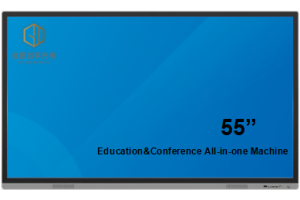 Conference & Education Integrated Machine, Industrial All-in-one Computer
55″ 65″ 75″ 86″ 98″ 4K touch TV interactive all-in-one whiteboard online education conference machine
55inch LCD display Android OS Dual-system 4K Digital multi-touch Multi-functions Multi-Media Interactive LCD Display has 3mm physical tempered anti-glare glass; strengthens the visual effect, improves the touch experience; standard 20-point…
Product DetailsQuick View